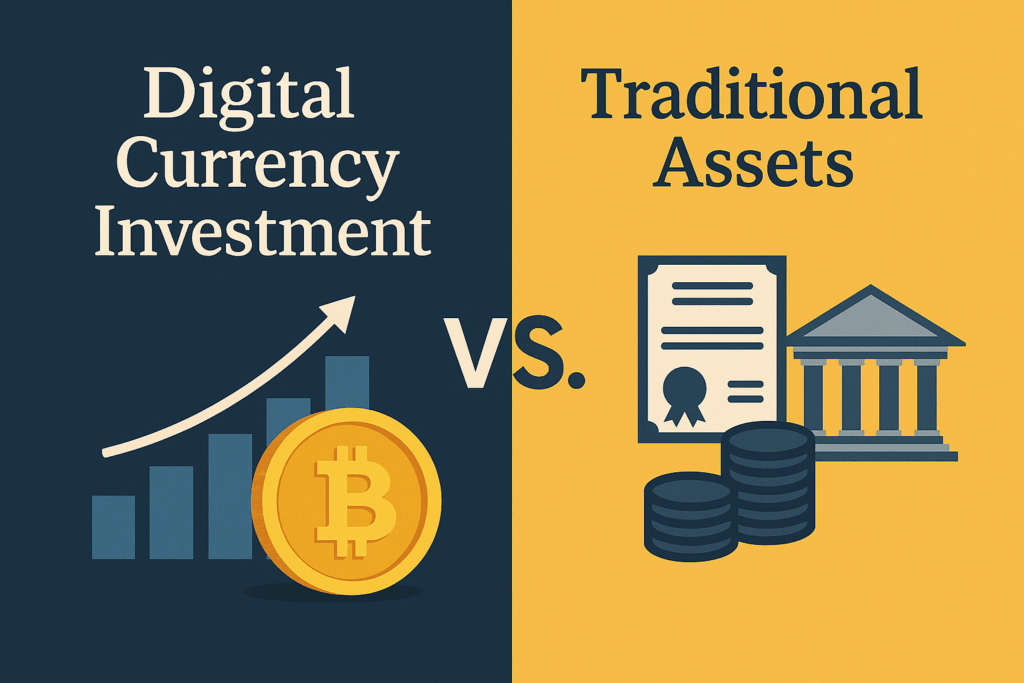
As the financial world evolves, investors are increasingly faced with the choice between investing in digital currencies (also known as cryptocurrencies) or sticking with traditional assets, such as stocks, bonds, and real estate. With the rapid rise of blockchain technology and cryptocurrencies in recent years, digital currencies have emerged as an attractive alternative investment class. However, traditional assets remain a cornerstone of investment portfolios for many.
As we enter 2025, this debate continues to evolve, with both sides presenting distinct advantages and challenges. In this article, we’ll explore the key differences between digital currency investment and traditional assets to help you understand which may be a better fit for your portfolio in the current market climate.
What Is Digital Currency Investment?
Digital currency investment refers to purchasing and holding cryptocurrencies like Bitcoin (BTC), Ethereum (ETH), and other altcoins with the expectation that their value will rise over time. Cryptocurrencies operate on decentralized blockchain networks, offering a new way to store and transfer value. Digital currencies can be traded on crypto exchanges, used as a store of value, or integrated into decentralized finance (DeFi) protocols.
Advantages of Digital Currency Investment:
- High Growth Potential: Cryptocurrencies have demonstrated the potential for substantial returns, with assets like Bitcoin and Ethereum experiencing significant price increases over the past decade.
- Decentralization: Digital currencies operate without a central authority (like a government or bank), offering an alternative to traditional financial systems.
- Accessibility and Liquidity: The crypto market operates 24/7, providing greater flexibility for investors to trade at any time. Cryptocurrencies can also be easily converted into fiat currencies on a variety of exchanges.
Risks of Digital Currency Investment:
- Volatility: Cryptocurrencies are notoriously volatile, with prices subject to extreme fluctuations in short periods. This can lead to significant gains but also steep losses.
- Regulatory Uncertainty: Governments worldwide continue to grapple with how to regulate digital currencies. Regulatory changes or crackdowns can lead to sudden price drops or market disruptions.
- Security Concerns: Although the blockchain technology underlying cryptocurrencies is secure, exchanges and wallets can be vulnerable to hacking, posing a risk to investors’ funds.
Read Also: Best Crypto Trading Platform: What Features Matter Most in 2025?
What Are Traditional Assets?
Traditional assets include investments in stocks, bonds, real estate, commodities, and other established financial instruments. These assets have been the foundation of investing for centuries, offering more stability and predictable returns compared to the highly speculative nature of cryptocurrencies.
Advantages of Traditional Assets:
- Stability: Traditional assets, such as the stocks of established companies or government bonds, tend to offer more stability and predictable returns over time.
- Regulation and Protection: Traditional markets are highly regulated, providing investors with protections through mechanisms such as deposit insurance and oversight by governmental bodies like the Securities and Exchange Commission (SEC) or the Federal Reserve.
- Long-Established History: Stocks, bonds, and real estate have been tried-and-tested investment vehicles for generating wealth and income over generations.
- Income Generation: Many traditional assets, such as stocks (through dividends) and bonds (through interest), provide income streams in addition to potential capital appreciation.
Risks of Traditional Assets:
- Lower Returns: While traditional assets are generally more stable, they typically offer lower returns compared to high-growth investments, such as cryptocurrencies, especially in a low-interest-rate environment.
- Market Risk: Stock prices can be influenced by market fluctuations, economic downturns, or geopolitical events; however, they tend to be less volatile than those of cryptocurrencies.
- Inflationary Pressure: With the increasing inflation rate in many countries, traditional assets may not keep pace with the rising cost of living, especially if interest rates remain low.
Digital Currency Investment vs. Traditional Assets in 2025: Key Differences
1. Growth Potential
Cryptocurrencies, particularly Bitcoin and Ethereum, have experienced remarkable growth over the past decade. Despite their volatility, they offer higher returns than traditional assets, especially for early investors. In contrast, conventional holdings like bonds and government stocks tend to provide more stable but slower growth over time.
Verdict:
- Digital Currency: Offers greater potential for rapid growth, especially for long-term investors willing to navigate market volatility.
- Traditional Assets: Offer steadier, more predictable growth but without the possibility of massive returns.
2. Risk and Volatility
Digital currencies are inherently volatile, often experiencing rapid and unpredictable price swings. This can be highly profitable for traders who time the market well, but it also means significant risks of loss, especially for investors who buy during market highs. On the other hand, traditional assets like stocks or bonds tend to be much less volatile, offering more stability but also less opportunity for outsized returns.
Verdict:
- Digital Currency: Higher risk due to volatility, but also higher potential reward.
- Traditional Assets: Lower risk and more stabilit,y but less potential for extreme gains.
3. Liquidity and Access
Cryptocurrency markets operate 24/7, giving investors the flexibility to buy, sell, or trade at any time, unlike traditional markets, which operate during set hours. This high liquidity allows for greater ease in trading. However, traditional markets also offer liquidity, albeit with some limitations. Investors are typically restricted to market hours, and transactions can take longer to settle, especially for international investments.
Verdict:
- Digital Currency: Provides constant access and flexibility, making it ideal for active traders.
- Traditional Assets: Offers liquidity during specific trading hours, with longer settlement times for certain transactions.
4. Regulatory Environment
Traditional assets are well-regulated, offering a sense of security and legal protection. In contrast, the cryptocurrency market is still evolving in terms of regulations. Governments are taking different approaches to digital currencies, with some embracing them and others imposing restrictions. Regulatory uncertainty can impact the market, but growing regulatory clarity in many regions offers hope for the future.
Verdict:
- Digital Currency: Faces more regulatory uncertainty, but this is gradually changing as governments implement clearer regulations.
- Traditional Assets: Well-regulated and legally protected, making them more secure in terms of investor protection.
5. Diversification
Diversification is a critical investment strategy. With traditional assets, you can diversify your portfolio with stocks, bonds, real estate, commodities, and other instruments. In contrast, cryptocurrencies offer a more focused investment opportunity, although the growing number of altcoins allows for some diversification within the crypto market. Diversifying within digital assets can provide some level of risk reduction but not to the same extent as traditional asset classes.
Verdict:
- Digital Currency: Offers diversification within the crypto market but is still a relatively niche and high-risk asset class.
- Traditional Assets: Offers greater diversification across multiple sectors, reducing overall portfolio risk.
Which Is Better in 2025?
In 2025, the decision between digital currency investment and traditional assets depends on your risk tolerance, investment goals, and time horizon.
- If you’re looking for high growth and are willing to accept significant volatility, digital currencies could be the right choice for you. However, this comes with a greater risk of loss, and you should be prepared for substantial price fluctuations.
- If you prefer stability, steady returns, and less volatility, traditional assets better suit your needs. They are less likely to experience the wild price swings associated with cryptocurrencies, offering more predictable returns over time.
Conclusion
Both digital currency investment and traditional assets offer unique benefits and risks. Cryptocurrencies provide high growth potential and flexibility, but they also come with higher volatility and regulatory uncertainties. Traditional assets provide stability, income generation, and established legal protection, but tend to offer lower growth potential.
As you consider your investment strategy for 2025, it’s essential to balance your portfolio with a mix of both digital and traditional assets, depending on your financial goals and risk appetite. By understanding the strengths and weaknesses of both asset classes, you can make informed decisions that help you achieve financial success in the ever-changing investment landscape.